TundeGBIt feels like being a kid againFounders who buildCalm leadershipCulture is arithmeticWhat could go rightMeetup hostsAll in on day oneMac refugeesAgents fix the configServer linux veteransSelf taughtAI removed the implementation wallOwn your dataContribution over glorybuilder/builders/tunde/avatar.jpg
// builder #08 · interviewed Oct 14, 2026
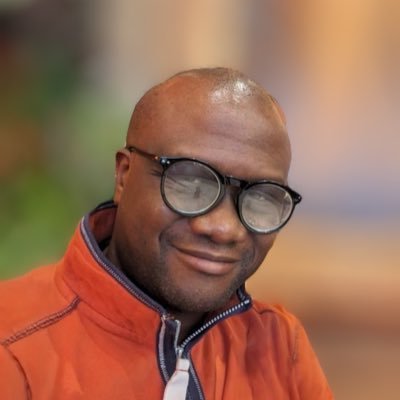
Tunde
Snuck out as a kid in Nigeria to learn PC repair, taught himself C from discarded lecture notes, led tech teams of 120, and now runs Zeroramp from London while hosting Omarchy London. He switched to Omarchy cold, 30 minutes before a work call.
first computerAssembled a boxed PC himself after watching repair shops; DOS, BASIC, then C
omarchy since2026
rigDell XPS on Omarchy, 27 inch 5K at 120Hz, Kinesis keyboard
found omarchyThe linux, by the way YouTube channel; switched cold when Quattro shipped
ai workflowAI will make engineers better humans
// life timeline
An Amiga at a friend's place
Builds his first PC himself; DOS, BASIC, then C
Petroleum engineering; writes Fortran homework in C
Oil fields to software and core IT
Red Hat 7.1 on servers
Moves to the UK
Ubuntu desktop 4 years, then Mac 10 years
Leads tech teams of about 120
2024Co founds Zeroramp
2026Omarchy Quattro on a Dell XPS, all in
2026Launches Omarchy London
// 00
The rundown
Tunde lives in London and runs a company. He co founded Zeroramp just under 2 years ago, and before that he spent about 20 years in pure tech and about 7 more in revenue operations and pre sales. At his peak inside a large publicly traded company, the technical teams he was responsible for numbered about 120 people. He is calm in a way you notice in the first minute. He does not raise his voice. He does not need to.
He is also the host of Omarchy London, the meetup he launched from a parked car with one text message. And he is the guy who installed Omarchy on a brand new Dell XPS 30 minutes before a work meeting, with no Mac on standby, because that is how he does things. One leg in, one leg out? Not his style.
His thesis in one line: "The culture is nothing more than the arithmetic sum of what everybody has agreed to bring to the table." Read on. He teaches as he talks.
“The culture is nothing more than the arithmetic sum of what everybody has agreed to bring to the table”Tunde · L373
// 01
Sneaking out for tech
The first computer Tunde ever saw was an Amiga at a friend's place. They played a combat game on it and he was hooked. Then came office machines running Lotus 123, the spreadsheet that ruled business computing before Excel took over.
The machine that really got him was a PC that came into the house and sat in its box for almost a year. Nobody touched it. So Tunde unboxed it, "before unboxing became a word." He did not know how to assemble a computer. So he went to the PC repair shops, watched the technicians work, went home and tried it himself. Again and again.
This was Nigeria, in the 80s. A kid walking to and from repair shops was not a safe thing, so he snuck out and snuck back in. "So some people would sneak out for parties. I was sneaking out for tech."
When he finally got it running, all he saw was DOS. A blinking command prompt and nothing else. Most kids would have stopped there. Tunde read the manuals that came in the box. That led him to BASIC, and BASIC led him to the big ideas: "what was source code, what was compiling, what was a binary, what was linking. Good old programming fundamentals from back in the day."
Tech lesson: source code is the text you write. A compiler turns it into object code the machine can run. A linker stitches those pieces and any libraries into one binary, the program you actually launch. Tunde learned that chain from paper manuals with no internet to ask.
He wrote BASIC for about 3 months. Then he found C. "Really enjoyed C." He learned it from books, manuals and discarded lecture notes from the local schools. Nobody in his family was interested. Persistence did the rest.
// 02
Fortran on paper, C in his head
Tunde went to university young and trained as a petroleum engineer. Drilling, wells, the whole thing. And in engineering school the official language was Fortran.
The way they taught it is wild. There were no PCs. A lecturer wrote on the board, students wrote code on paper, and the grade depended on whether you could explain why it would compile. On paper. "It's beyond crazy. It's ridiculous."
After C, Fortran felt limiting. So when assignments came, "I just wrote my assignments in C." The first 2 lecturers failed him for it. His reasoning was pure business sense, even then: there were no Fortran jobs out there, and C was faster, shorter and more accurate. Once he finally got access to a PC, he could test it too.
Tech lesson: Fortran is still alive in scientific computing and some engineering code, but C became the language underneath almost everything you use, including the linux kernel that runs Omarchy. Betting on C was betting on the foundation.
// 03
From the oil fields to core IT
He went to work in the oil fields. The risks were real. There is a part of drilling called well logging, where instruments are lowered into a well to measure the rock around it. One kind, gamma ray logging, uses radioactive sources. Workers were asked to sign waivers and were paid more for the risk. After a few near misses Tunde decided the oil fields were not for him.
So he used his math and programming to pull away from field engineering into software and then core IT. He stacked up the classic certifications of the era, Microsoft and Cisco, while he was still studying, and used them to get industry jobs while still in school. He was studying and working at the same time. "In fact, nobody knew that at home."
From there he crossed into pure tech for almost 20 years. Then about 7 years in revenue operations and pre sales, the side of a company that turns a product into revenue. That mix of deep engineering and commercial sense is exactly what a founder needs.
// 04
Zeroramp and taking intelligence private
Just under 2 years ago Tunde and his co founder started Zeroramp. His X bio puts it simply: "Taking intelligence private."
The mission is employee activation, globally, while respecting "the privacy, the cost, and the sovereignty of our customers."
Here is the problem. You hire someone. It usually takes 3 months, maybe 6, before they work on their own. Zeroramp asks a sharp question: "can we shorten that to 3 to 4 weeks?" That is phase 1.
Phase 2 is smarter still. Once people are up to speed, things keep changing: their job, the project, the industry, the market. A salesperson can end up selling something that no longer exists, or leave money on the table without knowing. So Zeroramp asks: "how can we intercept those changes, determine the commercial relevance, and then route it to the people that need to know?" The goal is that nobody slides back after ramping up.
The product is Zeno, a sovereign intelligence assistant that lives inside Slack and Teams. Per Zeroramp's site, your data is not sold or sent to third party LLMs, it respects permissions so restricted documents only answer to the teams allowed to see them, and every answer is scored for freshness and accuracy.
Tech lesson: "sovereign" AI means you control where your data lives and who can see it. Permission aware retrieval means the assistant checks your access rights before it pulls a document into an answer. If you could not open the file yourself, the assistant should not quote it to you. That is the hard part, and it is the part most chatbots skip.
Nix told him to plug it hard. Tunde, true to form, just explained it clearly and spelled out the URL: zeroramp.com.
// 05
10 years of linux without a desktop
"As with many of us in this community," Tunde came to linux through servers. His first was around Red Hat 7.1 with a 2.0 era kernel, before Fedora and CentOS existed. He ran linux commercially for years. For almost 10 years he never saw what a linux desktop looked like. Ever.
His favorite proof: after moving to the UK, he was in a data center, on the phone with someone guiding him down the aisles to a rack. He walked right past the machine. The screen was showing a Red Hat Enterprise desktop and he did not recognise it, because he had never seen one.
After that he tried the desktop. Fedora was basic. Ubuntu was better, and he used it at work for almost 4 years. He could do engineering on it but not office work, at least not effectively. So he went to the Mac, which is built on Darwin, a Unix. The command line felt familiar and the office apps were polished. He stayed almost 10 years. "That was a good middle ground."
Tech lesson: macOS sits on Darwin, which descends from BSD Unix. That is why a linux server person feels at home in a Mac terminal. Omarchy gives you that same terminal comfort, without the walled garden.
// 06
30 minutes before a work call
Tunde first heard about Omarchy from the host of the YouTube channel linux, by the way, who attended the first OmaCon in New York. It was still small, pre Quattro, but "all the who's who was there."
He followed it. When Quattro shipped, he was due for a new laptop anyway. "Okay, just going to do it." He bought a Dell XPS, downloaded Omarchy and switched. No side by side machine. No trial weekend. He put his M4 Mac aside, plugged in the XPS, and did it 30 minutes before a work meeting.
Nix called that ballsy. Tunde's view: "it's either going to work or not work." And he does not do things halfway. "One leg in, one leg out" is not how he lives.
"I plugged it in, everything worked. Everything." His display worked. His docking station worked, even though its box said it was built only for Apple Silicon Macs and would not work on Intel. Google Meet, cameras, mics, all of it. He took the call and could not quite believe it. Everything just worked.
His verdict on the creator: "Okay, okay, David's done something decent here."
On X he summed up his mindset: "Fix forward only. Call me obsessed." And: "Omarchy is the ladder you will use to climb out of any walled garden."
// 07
3 minutes, fixed
There were a couple of quirks. His laptop has a UK keyboard layout. His desk keyboard is a Kinesis ergonomic board on a US layout, and switching between them was not graceful.
In the old days that meant digging through config files for an afternoon. Now? "Load up the agent, say, 'Go do this.'" The agent found the problem and proposed a patch. 3 minutes, fixed.
Then his monitor. It is a 27 inch 5K display, but it came up at 4K 60. He told the agent he had paid good money for this screen and to please reconfigure. "3 minutes later, reconfigured, 5K, 120."
Tech lesson: on Omarchy, Hyprland handles your displays and input, configured in plain text files. Layouts live in the input settings and display modes in the monitor lines, which set resolution, refresh rate and scale. An agent can read those files, find the right line and change it. You still review the change. You just do not have to hunt for it. And refresh rate matters: at 120Hz scrolling and text look noticeably smoother, and Hyprland does not waste your time with sloppy animations.
The switch spread. He had already bought XPS 16s for his developer team months before. He showed them Omarchy, they said "This is pretty cool," and they switched too. Design and marketing could not yet, because they depend on creative tools. As Tunde put it on X: "Not everyone needs the Adobe Creative suite." And: "The @omarchy entry barrier keeps getting lower."
// 08
Omarchy London: just park
The meetup started with a story about speed. Tunde was inspired by how the Omarchy foundation got funded: a quick message, a yes, done. So when David posted that Omarchy had a Luma account and anyone could run a meetup as long as they connected it to the parent account, Tunde acted.
He was driving. He parked the car and texted a friend he had known for about 15 years, from their days together at Sega Games, now an engineering director at Wise in London. The message: there is this thing called Omarchy, there is a chance to run meetups, give me a venue and leave the logistics to me.
His friend was driving from Paris to London. "What, what? Like, venue for what?" Tunde: "Just park." He parked. He pulled out his laptop, searched for meeting rooms, and booked one on the spot.
Tunde went back to work and texted his marketing team. "Hey, guys, we're doing an event." They were surprised. He wanted the invite up within the hour. They did it.
Then it snowballed. They posted on Luma and shared it in their networks. The builder of Ren Cal reached out to present. Mehmet, who now runs the Omarchy security team, asked to come and presented. Gavin Nugent, who has spent 30 years in post production and is building an Omarchy creative suite, came along too.
Tunde gives the credit away, the way good leaders do: "We happened to be in the right city, and it happened to be the right time." Right venue, right city, right moment, shared interest.
// 09
What could go right?
This is the lesson Nix loved most. Before the first event Tunde asked himself the real question: what is the worst that could happen? They announce an event and nobody turns up. That is it.
Most people stop there. Tunde flips it. "But we should be thinking in terms of how big or what's the best that could happen." Because "you could live your entire life with what could go wrong, what could go wrong, and never do anything that really matters to you."
And then the line that should be on a wall: "What if it works?"
// 10
The calm is a choice
Nix said what everyone notices: Tunde is calm, smooth, influencing. You cannot imagine him angry. So where does it come from?
There are layers. First, his voice. What he feels rarely shows in his tone, and mentors told him so for years. So when something matters, he makes a point of saying it clearly, because his voice will not do it for him.
Second, calm under pressure. Growing up, he watched people who were rational on their own get riled up, lash out and set each other off, and he saw where that led. His conclusion: "the best decisions hardly happen when you're emotional."
Third, and most important to him, a deep conviction that worry has no legs to stand on. "I'm yet to find anybody to tell me that hand on heart, we believe the right thing to do is to worry, to be emotional, and to make rash decisions."
He is honest that he is not perfect at it. He strives for it. That honesty is part of why people follow him.
// 11
From solo genius to 120 people to zero
At first, he says, his leadership style was nonexistent. Like a lot of smart engineers, he was in love with his own IQ and believed he could change the world alone. "And for the longest time, I believed that."
Then he learned the big one: "the biggest shifts on earth have happened and only happened when a group of people got together."
He has a line for engineers in the AI era that hits hard: "AI will make engineers better humans." The edge you thought you held over people is gone. Now you have to be a good human.
His leadership grew in stages. First a small team of 3 or 4 engineers. Then, inside a large publicly traded company, about 120 people across the technical teams at peak. That forced a change: he could not do the hands on work anymore, so he had to trust people and "just give them their own room." His managers got the goals for the year, the milestones for the quarter, a budget, and freedom to hire and buy what they needed. Check in monthly. Call him straight away if something might derail the plan.
Then startups, where "you just can't assume anything exists." Nobody knows you. You make your own name.
And now, his own company, built from zero. You fight to start it. You fight to convince people to join. You fight for capital, "which we did, uh, fight and win." You fight to hire, and they did. "Because when momentum is zero, you have to overcome the inertia to do something."
Tech lesson for founders: inertia is physics before it is business. A body at rest stays at rest. The first push costs the most. Once it moves, every next push is cheaper. Same with companies, same with communities, same with switching to linux.
// 12
Culture is arithmetic
Nix's last question was about culture and how it helps customers. Tunde's answer stopped him cold.
In a big company, culture can be artificial, because the gap between an action and its outcome might be 2 years. At a startup, "if we make silly mistakes, we feel it immediately." So you cannot fake it. "The culture is nothing more than the arithmetic sum of what everybody has agreed to bring to the table."
And here is the part most leaders never admit: culture limits you. There are good business ideas that would make money, and Zeroramp would be the wrong team for them, because their culture could make those ideas fail. But for the business they are in, the culture is right, and it lets them "chisel out the right products, zero in on the right personas who care, offer it to them, and still be profitable."
His rule for anyone starting out: "you really can't fake it." You are who you are. "At best, you are who you've agreed to be."
Nix called it the most amazing definition of culture he had ever heard. He meant it.
// 13
Still bullish
Tunde does everything he can to promote Omarchy and support the group. "I'm still very bullish about the project." He likes the crowd the community has pulled together and hopes it keeps attracting more like minded people. That, he says, is what will really make it work.
Nix's take: anytime Tunde wants to speak on the Omarchy Spaces, he goes to the front of the line. He makes the point and tells a story while he does it.
Follow him at @thetundeo, check out Zeroramp, and if you are in London, come to Omarchy London. Come and make new friends.
// 14
In his words
"The culture is nothing more than the arithmetic sum of what everybody has agreed to bring to the table"
"I was sneaking out for tech."
"What if it works?"
"I plugged it in, everything worked. Everything."
"Okay, okay, David's done something decent here."
"3 minutes later, reconfigured, 5K, 120."
"the best decisions hardly happen when you're emotional."
"AI will make engineers better humans"
"when momentum is zero, you have to overcome the inertia to do something."
L21Nix: A bunch of other stuff. And, uh, just by chance, I had a Zoom with Lee. I just reached out to him one-on-one and said, "Hey, I'd love to meet with you and understand what you're doing."
L22Nix: And then that got me to another guy named James. And then I thought, well, why not put a Calendly out invite out there and, uh, invite people to sign up to be interviewed about Omarchy?
L25Nix: I put it up there at 1:00 a.m., and by 5:00 a.m. I had about 30, um, people asked to chat. So much so that I had to go to the Calendly and limit the times that people could sign up because there was, like, days where there were 7 in a row with no breaks.
L30Nix: That website, Omarchy.builders, I take it and I do a profile on them about what— and it's really leaned towards them— well, it's all about them, but about their Omarchy, um, journey. I hate that word. Um, and all that.
L31Nix: So I want to officially ask you, do I have your permission to record this transcript?
L39Nix: What kind of— and don't say anything that you don't want, you know, like, if we get to the end and you don't like something, just tell me and I won't put it in there. Um.
L41Nix: But let's start from the beginning, man. Like, what was— a lot of people have started on the Commodore 64. Uh, I think you're a little bit younger than that, but, like, what was your first computer that you— that you started with?
L42Nix: And, and, like, take me from where what locked in for you. And, uh, goodness gracious, you're building a company now, so you've got to be pretty technical.
L43Nix: Um, you're a great charismatic leader. I can already tell that from just talking to you on spaces.
L44Nix: So kind of give me your background that you want to share, and, and where you came up, and what it— what influenced you in technology, and, and how you got to the point of being a business leader.
L45Tunde: Okay. Hey, that's a bit long, but I'll do my best to compress it and.
L46Nix: Oh, you don't have to compress it. I love— I've loved the whole story.
L47Tunde: All right. Okay. Um, first computer for me that I saw— well, I think I saw two at the same time.
L48Tunde: One was in a friend's place, and I think that was the Amiga. So it wasn't a Commodore.
L50Tunde: I think it was the Amiga. And, um, we played a combat, uh, game there, so that— that got me interested. And, um, then the other computers I saw after that were in my dad's office.
L53Tunde: Office stuff. Uh, Lotus 123 and some other— some other things from back in the day. Uh, the first computer that I, uh, worked on that then really got me hooked, a PC came into the house.
L58Tunde: Um, so I would go in, I just, uh, unboxed it. Before unboxing became a word. I assembled it.
L59Tunde: I didn't really know how to assemble them. Then I'll go to these, uh, PC repair shops, watch guys fixing PCs, and I'll go home and then assemble them.
L60Tunde: And when I say go, come, um, this was in West Africa, Nigeria.
L62Tunde: Many, many years ago in that, yeah, in the '80s. So a kid going and coming, that's— that's not necessarily a safe thing in some parts of the world.
L69Tunde: So, um, yeah, then— so I learned slowly how to assemble it. Then I finally assembled it. And I think what was on it was a Windows— was it 3.1 or something like that?
L72Tunde: And, um, so all I— maybe, maybe it was even before that, because all I could see was DOS, the command prompt. Didn't know anything to do about it, so I read the manuals that came with the PC.
L76Tunde: Which I saw there. Uh, then started understanding what was programming, what was source code, what was compiling, what was a binary, what was linking. Good old programming fundamentals from back in the day.
L86Tunde: Yeah, it's, um, maybe, but this— there weren't— there were a lot fewer distractions back then, so.
L87Nix: But hold on. Learning C without the internet, which I'm assuming this was kind of pre-internet. Learning C without the internet, that's— there's a high level of intelligence and persistence needed for that.
L88Tunde: Yes, persistence for sure, because nobody in my family was interested. And, um, so you had books. I kind of remember some of the— then sometimes it was just manuals, like, um, discarded lecture notes from some of the schools.
L90Tunde: In the area. That and, um, so I just started practicing that. Really, really liked, uh, C.
L91Tunde: And from there, um, went into— then I went into school, into university. Originally, uh, I'm trained as a petroleum engineer, so we worked drilling, wells, etc. for a living back then.
L92Tunde: And even in school, the programming language of choice in an engineering school was Fortran.
L94Tunde: And, yeah, the way that they taught us Fortran then was there were no PCs, nothing. So somebody would be writing on the board, and you would write your code on paper.
L106Tunde: To the— to the point where when we started getting assignments, after— after I got fed up with it, when we started getting assignments, I just wrote my assignments in C.
L122Tunde: There or thereabouts. Yeah. Yeah, because for many reasons, I was bored, I was in a hurry, and again, I just didn't fall into many distractions, parties.
L123Tunde: I just didn't, partly because I just wasn't that social a person.
L127Tunde: So, um, so that's— that's how— that was the computing journey. Then I kept— I held onto that, worked in the oil fields. There were a lot of risks in the oil fields, safety— health and safety issues, as you can imagine.
L138Tunde: Yeah. So if you were— so there's a part of drilling that's called well logging, and there's a specific area of well logging called, uh, where— where you use radioactive materials, gamma ray logging. So you are basically exposed to radioactive materials.
L139Tunde: You know, you could be, it could be risky, but they then made you sign waivers.
L143Tunde: It's a risky, uh, thing. But, um, I just had to exit that and used some of the math knowledge and the programming knowledge to just pull away from field engineering into software.
L145Tunde: And then into core IT. So the typical certifications you would do then, the Microsoft certs, the Cisco certs, I did all that while I was studying in school as well, and then used it to get, um, jobs in industry.
L150Tunde: I was schooling and working then. And finally crossed into pure tech. And I've been in— and I was in pure tech for almost 20 years before moving into, um, revenue operations, pre-sales, that sort of thing, which was just in the last 7 or so years before then starting this company.
L151Nix: Wow. And what's— do you mind sharing what the company's about? I don't mind if you plug the crap out of it.
L157Tunde: Oh, yeah. So the company that we started, uh, this is just under 2 years ago now, we're called ZeroRamp. And what we do is, at least what we set out to do, is to solve employee activation globally.
L158Tunde: And whilst we're doing that, we want to respect the privacy, the cost, and the sovereignty of our customers. So what does employee activation then mean?
L159Tunde: So if you hire somebody, rather than going through the laborious process of getting them up to speed, maybe in 3 months or in 6 months before they become autonomous, can we shorten that to 3 to 4 weeks?
L161Tunde: After— after which they begin to produce, you know, for the company on their own. That's phase one. Phase two then is, once they're up to speed, there are things that change about their jobs, the project, the industry, the market, that could either mean if it sells, they're selling what no longer exists, or they're leaving money on the table.
L162Tunde: So how can we intercept those changes, determine the commercial relevance, and then route it to the people that need to know? So that they are— so that they don't degrade from that round state, so to speak.
L163Nix: Right. Well, and what's the URL to your company, if you don't mind sharing that?
L177Nix: Also, within the Omarchy arc, like, include what— like, start with where you got to Omarchy, and then start into, like, when you decided to make the, uh, start the meetup meeting, and then.
L179Nix: Talk a little bit about the meetup and how well it's going and the things that you're proud of for the meetups.
L180Tunde: Okay, perfect. So Omarchy is Linux on the desktop, right? Therefore, where I can— the origin story is best told from how I got into Unix or Linux, etc.
L181Tunde: So, as with many of us in this community, um, I had been in Unix and Linux, or from a server perspective.
L185Tunde: Yeah. Yeah, so 2.0 kernel, 7.1, before Fedora became a thing, CentOS became a thing. So I'd been doing that commercially for many, many years, and never had— very limited, for almost 10 years, I'd never seen what the Linux desktop looked like, ever.
L188Tunde: Yeah, completely. To the point where I was in a data center once, this was after I had moved here to the UK, the— and there was— there was some machines I was working on, I then went into the data center, and someone was talking to me on the phone, "Go to this aisle, go to this rack, you're almost there." And as I walked past it, I realized that the terminal is there.
L189Tunde: It's there. It's Red Hat Enterprise this.
L190Tunde: And I couldn't recognize it because I hadn't seen it before.
L197Tunde: So that got me into the Mac. And Mac was that good middle ground there because it's fundamentally a Darwin, which is a Unix, so the command line felt familiar, but the interface was polished enough that you could have office applications there. So I was on the Mac for almost 10 years.
L199Tunde: That was a good middle ground. So, um, then— so how— what I— how I then got into Omarchy is I had first heard about it from the guy who runs this YouTube channel, Linux, by the way. That's the name of the YouTube channel.
L201Tunde: He— he attended the first OmaCon conference that was held in New York. So he was there. They were still small scale then.
L202Tunde: This was pre-quattro. And, uh, Toby was there, David was there, PrimeAgent was there, I mean, all the who's who was there.
L203Tunde: And that's how I really got to know about it. Then by the time I— by the time Quattro came out, I'd been following it, and then it— it was just— it just made sense to make the switch then because I was going to cycle, I was going to change my laptop then.
L204Tunde: I thought, "Okay, just going to do it." So I just bought the XPS, uh, downloaded Quattro, and I— maybe, maybe— of course, now I know most people are not like this, but I didn't have, like, a side-by-side, "Let's try it," type of thing.
L208Tunde: Oh, yeah. I didn't have that kind of thing at all. So Quattro was released, bought the laptop, just installed it, and I— I just switched immediately.
L209Tunde: Literally switched. I didn't have my Mac side-by-side.
L210[redacted: private, lines 210 to 225]
L226Tunde: Yeah, that's perfect. So Quattro XPS, I installed it, literally just packed the— put the Mac at an M4 site, um, and I plugged it in. This was 30 minutes before a work meeting.
L234Tunde: But here now we're going to see if it's going to work. I plugged it in, everything worked. Everything.
L235Tunde: The— the screen worked. My— my— I have this Ivanki docking station on the Ivanki website that said, "We built this docking station exclusively for Apple Silicon Macs."
L248Tunde: Yeah. That's why I was like, "Okay, okay, David's done something decent here." Then there were some small quirks, like, uh, my laptop is on, uh, UK keyboard layout, but the keyboard on the desktop is this Kinesis ergonomic type of keyboard.
L249Tunde: I was on a US layout, and the— it wasn't switching gracefully, so I fixed that. And unlike back in the day when you had to be digging into configuration files, etc., it was just, "Load up the agent, say, 'Go do this.'"
L250Tunde: And I was like, "Yeah, I found it. I'll add this patch."
L251Tunde: And 3 minutes, that was fixed. My screen, which I bought from Watching, uh, Linux, by the way, is video.
L252Tunde: It's, uh, a 27-inch 5K resolution, um, but the default had to 4K 60. So I just, again, told the agent that, "Dude, I paid good money for this.
L253Tunde: Can you please reconfigure?" 3 minutes later, reconfigured, 5K, 120.
L254Nix: Did you— do you actually see a real difference in the monitor when you do that?
L255Tunde: Yeah, when— more so on the Mac, but less so in Hyperland because it— Hyperland doesn't just waste time with sloppy animations that are flowing through. I think it's just blinking and out, yeah. But if you're scrolling, yes, you do see the difference.
L256Tunde: And with text, you definitely do see the difference. So that's how— that's how I switched.
L257Tunde: That's how I got into the Omarchy story then. Um, incidentally, I had bought XPS 16s for our developer dev teams, like, some months ago, so I just showed them, and they were like, "This is pretty cool."
L258Tunde: And that's how they also just made the switch. But the guys who couldn't switch are in, like, design and marketing because they still have a lot of creative tools.
L260Tunde: And there's a— there's a separate, uh, answer, which I'm sure you know about too, or you've heard about, to those ones, which we'll get to. Um, the meet— so the meetup. So how did we then get into the meetup?
L261Tunde: Um, I— I think this was initially inspired by how David even raised money for the foundation. This was literally a WhatsApp between himself and Toby.
L262Tunde: And he was like, "I'm thinking of doing this." I was like, "Yeah, I'll match you."
L263Tunde: And just like that, literally just like that, they did it. So when David made this post that, um, "This is our account on Luma.
L264Tunde: Anybody who wants to do meetups, like, you're free to do it. Just make sure you connect, you connect to this parent account," I saw that.
L265Tunde: I was driving, and I just parked the car, and I picked up the phone and I text my friend, who's— he's an— he's an engineering, uh, director here also in London with a company. The company's name is Wise.
L266Tunde: They're in the payments, uh, uh, payments business. They started out as TransferWise, but now they're called Wise.
L267[redacted: third party private information, lines 267 to 268]
L270Tunde: So I text him. Yeah, I just text him saying, "Um, you've known me for, like, uh, 15 good years now, because he— he and I worked together at Sega Games many years ago, that there's this thing, it's called Omarchy, um, there's an opportunity to run the meetups. I think we'd do it.
L271Tunde: Uh, if you give me a venue, please just leave the logistics to me." So I parked.
L272Tunde: He was driving from Paris to London. I said, I said, "What, what?
L273Tunde: Like, venue for what?" I said, "Just park."
L296Tunde: But if you want to part this world and be able to say hand on heart that I did what I believe I was put here to do, then a lot of— a lot has to be about what could go right. What if it works?
L298Tunde: Yeah. So, uh, so that's how we started it. And, uh, all we did was just put it there on Luma, start circulating it within our networks.
L299Tunde: Um, then suddenly, uh, we got a message from, uh, the guy, Ren Cal, who builds this application called Ren Cal, saying, "Hey, this event's happening. I would love to present.
L300Tunde: These guys said you're looking for speakers." Like, "Yes, brother, come on."
L301Tunde: Um, Mehmet, I never— I didn't even know who was in the security team. Mehmet, who now runs the security team.
L312Tunde: Gavin. That's what he's been doing his entire life. I said, "Yeah, come along."
L313Tunde: So it— it all just snowballed, so to speak, um, from there. I think we happened to have the right venue.
L314Tunde: We happened to be in the right city, and it happened to be the right time, and we happened to be in a common interest with many people. I think that's— those would be the factors that influenced its success.
L316Tunde: Yeah. So that's— I hope I properly explained the arc, how we got into it, how we got into the meetup, and how things have worked so far.
L317Nix: It was amazing. How— so you strike me as a very calm, influencing, very smooth, very— you're— you're— talk to me about your leadership style. I— like, I— I can't even imagine you raising your voice.
L318Nix: Like, I don't see you getting angry. I— I see you being very, very calm.
L319Nix: And, like, even under pressure, I think you probably get even more calm under pressure. Like, where did you learn that?
L320Nix: And, and, like, how does that influence your leadership style within your company?
L321Tunde: Okay. I think, um, I think there are a few layers to that. If we're just looking at, um, voice, a lot of how I feel and what I think just never shows up in my tone.
L322Tunde: So just by listening to my voice, it's quite difficult to— to detect if I'm really upset about something or really excited about something. It— at least people— people have told me that for, for years.
L323Tunde: And even people that mentored me said, "I need to know. That's how people are perceiving me."
L324Tunde: So if I'm very serious about something, I— I really need to find ways to communicate it because it just doesn't show up, like, in my voice.
L325Nix: Right, a very flat line and a smooth car.
L328Tunde: Exactly. So there's— there's that element. Um, the— then the calm under pressure, I think— I think, yes, it exists most of the time.
L329Tunde: Um, for— for two main reasons. Um, one, one is, I've just— growing up, I saw a lot of, uh, negative results that came from people being emotional.
L330[redacted: private family detail, lines 330 to 332]
L333Tunde: So there was— but there was plenty of opportunity just to observe and watch people. So, um, I would see people who, on their own, could be rational, and then maybe they get riled up by something, they just get very emotional, and then they lash out, and that triggers an emotional response from someone else.
L334Tunde: And two people who ordinarily should care about themselves, just— the things just go downwards from there. So a lot of it came from observing that the best decisions hardly happen when you're emotional.
L335Tunde: So part of— part of that is one. And the second, and even most important part is, um, [redacted: private]
L336Tunde: And, um, so I really have no— I don't have any legs to stand on by entertaining worry or responding to pressure. And I'm yet to find anybody to tell me that hand on heart, we believe the right thing to do is to worry, to be emotional, and to make rash decisions.
L337Tunde: Like, nobody on earth really believes that. So those would be two things that— that— that drive— that drive that.
L338Tunde: I've not always been, um, 100% on the game in that area, but I— I definitely do strive to be. Um, leadership style, if I may then go into that, that's— that's— that's changed a lot over the years.
L339Tunde: Um, first, it was nonexistent, because as with many— as with many techies with, you know, any with above-average intelligence, you— you're so in love with your IQ and your own intellectual abilities that you— you really believe you can change the whole world based on your own abilities. And for the longest time, I believed that.
L340Tunde: It took me a long time to learn that, uh, the biggest shifts on earth have happened and only happened when a group of people got together. Now, you cannot achieve anything on your own.
L341Tunde: But we— I— I think engineers have a weakness that we really don't like to admit that. Uh, so if you've seen me posting recently that AI will make engineers better humans, because, you know, that thing you thought you held over people, you've lost it.
L344Tunde: Um, so I— I— first it was nonexistent. Then I had to come to learn that, okay, it's a thing. And then it progressed from, you know, managing a team of engineers, like a small team of engineers, three, four engineers, um, at peak.
L345Tunde: This was with a large publicly traded company. Now, at peak, the entire engine arm of the technical teams I was responsible for was maybe 120-something at peak.
L346Tunde: It wasn't fun because I couldn't do interesting work. Um, so managing and leadership then had to evolve into, uh, just trusting people a lot more, uh, to— to make decisions and just give them room, just give them their own room.
L347Tunde: So I really went from getting into the nitty-gritty technical, uh, elements with people into at— at peak, it was, "This is what we want to achieve this year. These are the milestones for this quarter.
L348Tunde: This is the budget we've received from the company. So, um, this is X.
L349Tunde: You have a budget. Uh, do with it as you wish.
L350Tunde: Hire, buy infrastructure, buy software, do whatever. Uh, but this is— this is what we must deliver for the company.
L351Tunde: And right now, you've got 10, 20 people working for you. They're in these offices.
L352Tunde: Uh, let's check in every month if you have any issues. If something is going to derail us, like, call me straight away."
L353Tunde: So, um, that— that was one way. Um, but that's in— that's in the large established company.
L354Tunde: Um, then we— I also had to change a lot when I moved out of that into the startup scale-up scene, because things don't— you just can't assume anything exists. Anything you try is going to work.
L355Tunde: Nobody knows you. Nobody cares about you.
L356Tunde: You— you have to make a name for yourself. So, uh, leadership then was a different thing.
L357Tunde: Totally different game. Now, in our own company, um, it's even different.
L358Tunde: It's evolved again because we had to start from zero. And you— you have to fight for everything.
L359Tunde: You have to fight to start the company, fight to convince people to join you in starting the company. Uh, fight for capital, which we did, uh, fight and win.
L360Tunde: Uh, fight to hire, which we have— we did hire people. Um, just— just fight, fight, fight, fight, because— because when momentum is zero, you have to overcome the inertia to do something.
L361Tunde: So the leadership style, even now, is a lot— is a lot different. So what can I say?
L362Tunde: It didn't exist. I had to learn it wasn't necessary.
L363Tunde: It's evolved. The current version is— is from— is more about starting something from nothing, uh, right?
L364Tunde: And, um, it's— it's not— it hasn't— the calm demeanor wasn't something I think I was born with. I can trace it to specifically— to specific incidents that have influenced that.
L366Nix: It really does. And as a— you know, you're a business owner, and I want to respect your time. So I've got one more question that I want to ask you, because, um, it's just occurred to me that this hour of time is, like, very expensive for you.
L369Nix: Can you talk about the importance of culture and how you shape culture and how, um, you use culture within your company to— to, you know, build better products, lead people better, and— and how does culture direct— the— the main question is, how does culture directly apply to the benefit of your customers?
L370Tunde: Yes. I think, um, yes, culture is important. Um, there are certain— there are certain cultures.
L371Tunde: The culture of a company, uh, cannot be— you— you can't fake it, especially at our scale. In, uh, in large publicly traded companies, yes, it can be artificial because the latency from your action to outcome could be two years.
L372Tunde: Uh, if we make silly mistakes, we feel it immediately because we're still small. So culture is important.
L373Tunde: We cannot fake it. The culture is nothing more than the arithmetic sum of what everybody has agreed to bring to the table, because we— we can't fake it.
L374Tunde: And what does that mean? It really means, uh, there are businesses that could be legitimately good ideas.
L375Tunde: They could make money, but we are the wrong team to do that because our culture could make it fail. Um, but the line of business we're in, we're right for it because we think we have the right culture that can enable us to chisel out the right products, zero in on the right personas who care, offer it to them, and still be profitable.
L376Tunde: So I 100% believe culture is— is essential, but you really can't fake it. And— and especially if you're starting a business, you are who you are.
L377Tunde: At best, you are who you've agreed to be. And who you agreed to be just means, "Yes, this is how I am, and it's okay for the firm," or, "This is how I am, and these are the changes I need to make to— for this particular company to— company to work."
L379Tunde: I think that— that would be my honest, uh, honest take on culture. And I'm trying to look at it from many perspectives, from being an employee, being a manager in a large company, in a mid-sized company, in a startup. Uh, but right— right now, if it's about us, um, it's who you are, or it's who you've collectively agreed to be.
L380Tunde: It, uh, it limits your options. Let's be honest.
L381Tunde: It means, "This is the kind of company you can build. You can't— you're just not right to build another company."
L382Tunde: And, uh, if you have that right mix of who you've agreed to be and the business you're building, be true to yourself, and definitely you'll be able to serve your customers.
L383Nix: No— no kidding? That's the most amazing definition of culture I've ever heard, ever.
L385Nix: Because everybody else says all the standard blah, blah, blah, uh, you know, preferred word, blah, blah, blah, lingo, blah, blah, blah. Um, you're an amazing person.
L387Nix: Um, you sn— you snuck up on me and taught me some things. I really respected you before, um, on the spaces. And I got to tell you, you're— you're going to— you're going to make me think this afternoon.
L388Nix: And I— and, um, I'm humbled to call you my friend, if I may. And I really appreciate your time today.
L391Nix: There's— there's so much that I'm going to think about out of this conversation. Um, I really appreciate you, Tunde. I hope to see you on the spaces when we— when we can make it.
L392Nix: And thank you so much for spending this, uh, very expensive hour with me. I— I really appreciate you, sir.
L393Tunde: Oh, no. No worries, man. I appreciate it.
L394[redacted: private, lines 394 to 397]
L398Tunde: Yeah. So I— I'm— I'm— I want to be there. I— I do everything I can to promote the project, uh, support the group, do everything.
L399Tunde: And, um, I— I still— I'm still very bullish about the project. I like— I really like the crowd you guys have pulled together, and I respect you a lot for that.
L400Tunde: And I'm— I'm hopeful that we just keep getting more of the same kind of like-minded people. I think that's— that's what will really make it— make it work.
L401Nix: I appreciate you so much, man. Uh, anytime I see you on the space, if you want to speak, I encourage you to speak. Uh, you go to the front of the line every time because you have really— you know, a lot of the people on there just kind of bla— blabber on about things.
L402Nix: And you have a— you have a way of making the point, but also m— m— making a story in it somehow. And— and your communication is incredible.
L405Nix: Um, if you— if I can ever help you, you have my information. Um, I stand ready to do anything you need from me, and I'm at your disposal, sir.
L406Tunde: Thank you, sir. I appreciate it. Thank you so much.
L407Nix: Have a wonderful evening. Thank you very much.