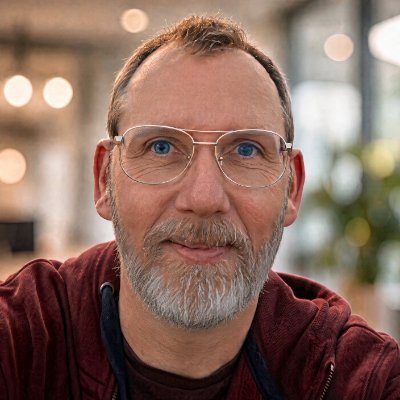
Allan DehnDKAgents run as a teamIt feels like being a kid againFilling the app gaps that kept people on MacPoint it all at human flourishingOwn your dataWhat could go rightbuilder/builders/allan/avatar.jpg
A heart-first builder in Denmark who started on a Commodore VIC-20, came back to building on Omarchy, and now ships OmaEar, a podcast player for Omarchy, Shady shader screensavers and small tools with a team of agents.
github/allandehnopencodeomarchy-pluginsgithubquickshell★ Plugin author★ Ships in Rust
based inDenmark
first computerSaw a ZX Spectrum at school, then got a Commodore VIC-20 and typed in programs from computer magazines
omarchy since2025
// shorts
Shorts
13 videos
0:34A ZX Spectrum at boarding school, and the instant click of technologyI actually think that the first computer I saw was probably a ZX Spectrum. I was, I was on a boarding school here in Denmark and one of the other...0:25OmaEar, his podcast player and homage to Podcast AddictThe biggest and most mature project I've made so far is definitely OmaEar, which is an homage, let's say, to an app on Android that I really love...0:28Typing a whole program into a VIC-20, knowing it vanishes at power-offBut I was on a VIC-20, was my first computer. Like a whole program from a magazine for me to take home and type in. And one of the, the beautiful...0:37Pitching a hairdresser a website that's agent-aware from day oneRight now I am, I'm at the stage, let's say, of automation, where they are finding the leads and I will be going like physically to like a...0:28The amount of stuff he can make now makes no senseThe amount of stuff I can make with that, it's like, it doesn't make any sense. I'm a former programmer, like back in the day. It's totally...0:29DHH reignited his creator gene, and there was no looking backDHH comes around, and he totally reignites my, like, creator gene and my, you know, yeah, just all my creativity and all my remembrances of all...0:43After years of lock-ins and walled gardens, Omarchy brought back agencyI just want to, like, really acknowledge the level of inspiration that the DHH is, like, putting out there. And I also think there was just such a...0:37His first app: a Scratch Pad built by a self-described privacy nerdThe very first one I did actually was a thing that I have, but it's there and it's public, it's called the Scratch Pad, because I find myself, you...0:28He loved writing code, but the creativity was always the pointWhat I'm finding myself is, I also, I really love, like, or loved, like, doing the code and creating it. But it's been such a long time for me...0:36Software made for one person, not by big corporationsI don't think there will be big corporations doing this going forward. And I actually think that the software will be like probably, probably...0:30From PolyPascal on an amber screen to now, and it'll all look archaicThe state of mind that I am in right now reminds me totally of the DOS days and when I was first building my first big project in PolyPascal on a...0:31What's the next edge once everything is solved? CompassionSo what is the next edge? Because all of this has already been solved. And my answer, and there are variations of it, but my answer was just...0:30The most cliché answer, and the real one: loveThis is the most simple and most cliché answer you could ever get, but it's actually love. And you can find it in so, so many places. And it's...
// life timeline
2025Gets a Beelink and installs Omarchy 3 on it
2026Builds Scratch Pad, a tiny Rust editor, with OpenCode
2026Ships OmaEar, a podcast player for Omarchy
2026Ships Shady, Shadertoy-style shader screensavers for Omarchy
2026Sets up a team of agents with roles
// 00
The rundown
Allan Dehn calls himself heart-first, and it shows in how he builds. He started on a Commodore VIC-20, worked as a programmer back in the day, and came back to building when Omarchy arrived. Now he ships Omarchy apps with a team of agents. Asked once what the next edge is, his answer was simple:
"my answer was just compassion. That's the next edge." ↳ jump to L151
“my answer was just compassion. That's the next edge.”Allan Dehn · L151
// 01
A VIC-20 and a magazine
The first computer Allan saw was a ZX Spectrum that belonged to another pupil at his boarding school in Denmark. It felt like a whole new world opening up, and technology clicked for him instantly. ↳ jump to L39↳ jump to L41 His own first computer was a Commodore VIC-20. He typed in a program by hand, and with no tape drive it was gone the moment he switched the machine off. He still finds that beautiful. ↳ jump to L51 The best source of help back then was computer magazines. ↳ jump to L53
He went on to work as a programmer, with his first big project written in Pascal in the DOS days. ↳ jump to L117↳ jump to L149
// 02
A creator gene, reignited
Allan got a Beelink in late 2025 and installed Omarchy 3 on it right away. DHH's work brought back his creativity and his memories of everything he had made on computers. "he totally reignites my, like, creator gene" ↳ jump to L129 For him it was about agency, after years of lock-ins and walled gardens. ↳ jump to L131
His first build was Scratch Pad, a tiny Rust editor with big fonts and nothing else, made with OpenCode so he could quickly clean share IDs out of links. He calls himself a bit of a privacy nerd. ↳ jump to L133 His most mature project is OmaEar, a podcast player for Omarchy and a tribute to Podcast Addict, an Android app he loves. Shady, which turns Shadertoy-style shaders into a calm screensaver and viewer, came next. ↳ jump to L133
He cares more about what the code makes than about the code itself. "the most important part was the creativity" ↳ jump to L135 When he wanted an alarm clock on his desktop, he asked an agent and had one in no time. ↳ jump to L135 He has also learned that agents still need steering, like when cover art flickered and the app needed to load faster. ↳ jump to L143
“the most important part was the creativity”Allan Dehn · L135
// 04
A team of agents
Allan runs his agents like a small company: a design agent, an agent for each project, a security agent, a CEO, and a business manager that finds local leads. "I'm really, really, really enjoying the idea of having a team." ↳ jump to L105 He plans to build websites for local businesses, like a hairdresser, made agent-aware from day one, without heavy frameworks. ↳ jump to L111
He sees software becoming personal. Find something close, then change it to fit exactly how you like to work. ↳ jump to L139 The excitement reminds him of the DOS days. ↳ jump to L149
“I'm really, really, really enjoying the idea of having a team.”Allan Dehn · L105
// 05
In his words
For Allan, the tools matter because people do. Compassion is the next edge, and the barriers to it are coming down one by one. ↳ jump to L151 His message is love, a smile for someone on the street, and taking the time to listen. "it's so valuable. for us as humans to feel a sense of connection and being met." ↳ jump to L155
L1[redacted: call setup and consent chatter, lines 1 to 37]
L38Nix: Okay, so tell me about the first computer that you remember that you saw, and then how did it impact you, and, like, how did it set the course of your life?
L39Allan: Right, I actually think that the first computer I saw was probably a ZX Spectrum. I was, I was on a boarding school here in Denmark, and one of the other pupils there had a ZX Spectrum. So I actually think that's my, my first, like, yeah, my first time coming upon it. And…
L40Nix: what went through your mind? Did you think, oh my gosh, I love that, or was it curiosity? Was it excitement? Was it, like. Confusion?
L41Allan: No, if you take confusion out, I would say all of the above. It was like… I'm just… as a person, I'm just, like, really, really, like, novelty is a big thing for me, and I'm… yeah, yeah, and I'm so, so curious about it, and and this is exactly that. I mean, it's, Yeah, it's just, you know, it's like a whole new world opening up, you know, and for whatever reason, like, you probably, and many of the others you have on the show, like, technology, for some reason, is just like an instant click, somehow. And specifically with computers for me, so, yeah.
L42[redacted: call chatter, lines 42 to 49]
L50Nix: Exactly. Alright, so… when you first got on your first computer, what… what were you… like, what did you do? Was it basic? Was it… Was it floppy disks? Was it… did you… did you get on BBSs? Do you know… did you do that whole thing?
L51Allan: Yeah, yeah, but I… actually, I was, maybe like you, I won't put words in your mouth, but I was on a VIC-20, was my first computer, the Commodore VIC-20, and you know, that had a cassette. Oh, no, I don't think… no, no, the cassette player was an addition, that was a peripheral. to the machine. And one of the beautiful things about the… I mean, this is more of a philosophical thing. is that it's so ephemeral, because I didn't have, like, a tape station or anything there, so I typed it in, it took, like, forever, and then I… I know that when I turn this off, it's not there anymore. So it was, like, it was a really special moment, in that… in that area. I really enjoyed it.
L52Nix: And in that time. Like, there wasn't… there was nowhere to go get help. There weren't… there wasn't the internet, like, libraries didn't have any information. You were on your own.
L53Allan: Exactly, exactly. So the best source of this were magazines, computer magazines in Denmark, at least. Yeah.
L54Nix: Right, you probably got the magazines with the floppy disks, like, glued to it.
L58Nix: So the magazines at that time would literally print out the program, and you would type it in.
L59[redacted: private, lines 59 to 97]
L98Nix: Okay, so let's get back into… let's fast-forward a little bit, and I want to take your mind to the time when was… Answer yes or no for me, let me keep going. Was ChatGPT your first introduction to AI, kinda?
L99[redacted: call chatter, lines 99 to 101]
L102Nix: So talk about when you first encountered the chat, and you could ask it questions, and then my guess is that you started to go into, like, copy and paste, so you'd ask it a question, copy and paste it to some other application, and then do something, and then… and then you would go back and forth, right? And then talk about, like, are you… are you coding with… with… with, like, clawed code now? Are you Codex? Or where… where are you with… with that?
L103Allan: Sure, so I actually think my first exposure was mostly… I don't remember if Anthropic had, like, an early version called Pi, or if that was the Mario, you know, the Pi that we know today, the harness, I'm not sure, but I'm…
L105Allan: Yeah, and I'm almost sure that Anthropic was my first interaction, and it was… well, it was from the start of apps, I guess, and then… I remember at one point, it started telling me what not to talk about and what not to talk about, and from that point on, I haven't used it at all. Like, I… Okay. Yeah, that's not for me. Now I use agents, and I'm telling you, you can probably see on my GitHub when I started using agents, because it's just, like, going off. Yeah, it's… I love it so much, man, and I'm really, really, really enjoying the idea of having a team. And, like, having the different roles there, you know, I have… yeah, I'm just, like, I'm so, so, so excited about this, because for some reason, apparently, I'm really into, like, setting up a team, you know, so I have… I have a design agent, and I have a program, an agent per project, right now only two, and I have a security agent, and then I have the, let's call it, I know, CEO is the normal way of describing that. And I just recently, hired, let's say, like, a business manager, also, to help me find local jobs. Like, I mean, as about… I mean, not a real business manager, but, like, about…
L106[redacted: call chatter and third party, lines 106 to 110]
L111Allan: Right now, I am… I'm at the stage, let's say, of automation, where they are finding the leads, and I will be going, like, physically to, like, a hairdresser and ask if I can help them. And what's actually interesting in this is that I have already, like, said to my designer that I want to make it agent-aware from the beginning. So that's an edge already, yeah, yeah, because it's… it's… it's going to be the future, like, with… without a doubt, and… you know, so, when you sit there on your phone and you ask, so I'm here, I would like to, da-da-da, and then, I mean, the sites that I provide for my customers, they will pop up first, because they are already there, right? So… And it's… yeah, it's just… I'm so… I'm so, so curious about this, and I'm going to have the agents make me some examples that I also want to present to potential customers. And I'm actually thinking about what the best way to do it is. I don't want to, you know, have a framework. I don't want to use, like, what is it, WordPress? or something else. I want it to be, like, yeah, yeah, exactly, I want to be… I want it to be, like, so clean somehow. Also, like, really recognizing that the agents don't care at all about PHP and frameworks. They are so good at what they are doing with the, let's say, with the code part of it, right? Yeah, so that's why I'm going with that. Oh, and I also wanted to say that the reason why I'm setting… said it's not a real business manager was more, like, so that you didn't get the idea that I hired a human. That was so… so there's some kind of, Vocabulary that we have to get used to when we are referring to these kinds of things, so we can discern what is what and what we're talking about.
L112[redacted: the host's own tools]
L113Allan: Yeah, it really is, and I can feel myself already, like, at least at the starting level, like, optimizing for that when I'm interacting with my agents, you know, just to make this, like, really robust somehow, at least at where we are right now, yeah.
L114[redacted: the host's own tools and prices, lines 114 to 116]
L117Allan: I'm a former programmer, like, back in the day. I was hired as a programmer. So I have a lot of, like, but it's old, but a lot of experience in that field, so I feel, like, totally comfortable with these things.
L129Allan: Okay, I just want to, like, really acknowledge the level of inspiration that the DHH is, like, putting out there. I started using Omarchy in the early days, so that was… I actually looked it up. I got my Beelink, in November last year. on the 25th of November, so let's say December last year. And immediately installed version 3, whatever, on it. And been doing that, like, since. And when DHH comes around, and he totally reignites my, like, creator gene, and my, you know, yeah, just all my creativity, and all my remembrances of all the wonderful things I have created using computers. And then I just start with Omarchy, and, you know, there's no looking back. I mean, it's just completely insane.
L130Nix: You know, one of the things that he did, and I don't know if he meant to do it, or it was by accident and lucky. Is that he provided this service tool operating system And then somehow injected a little bit of nostalgia in there, and that was the human emotion that tied the good product. And when you have a good product that can touch your emotions, it really pulls you in.
L131Allan: Yeah, and I also think there was just such a longing for all of us to… this is a bit more philosophical, maybe, but also just this sense of agency that has been, like, so missing these last, I don't know how many years, with all the lock-ins and the walled gardens and all of this. And he just comes around, and of course, the timing is perfect, but he just, yeah, totally… blows it open, like, yeah, completely. It's… it's so amazing. And I… I really cannot thank him enough. I mean, really, from the depths of my heart, it's… it's amazing what he has done already, and it's, yeah, just, you know, progressing. you know, have you seen all the… of course you have, but all the sign-ups, you know, with Alibaba, with X, with Cloudflare, with… yeah, it's… it's… yeah, it's amazing.
L132Nix: Amazing. So then, how did you… you… you… You started on a marchy, you were… Pardon me. you started on Omarchy. You were a little bit ahead of the curve, because most people found out about it at 4.0 at Quattro, so you're ahead of the curve a little bit. A little bit. So, when 4.0 came in, you weren't learning it, but you were already kind of in the camp, and already there. So, what… what was the first thing? Was OmaEar the first thing that you created, or was it Shady, or was it smoltop? What was the thing that brought… like, how do those things… talk about how the first one, and then talk about how they all kind of collectively came from the same source.
L133Allan: Right, the very first one I did, actually, was a thing that I have, but it's there, and it's public, it's called the Scratch Pad, because I find myself, you know, with YouTube, I'm a little bit of a, let's say, privacy nerd, so with YouTube videos, when there's a share ID on, I wanted to remove it, so I found myself, like, looking for, like. very quick-to-launch, small editor, and it's just, like, a window with big fonts and, you know, nothing else. Like, completely nothing else. Right. And it actually, though it's probably not the best way to do it, it records every, every key… key press, so you don't have to consider that either. Yeah, so I made that using… I don't remember which model, but that was actually open code. I used for that, and that's made in Rust, and it was pretty painful in the beginning. I really had to… but also, to be fair, it's also me learning how to use these tools, right? Perfect. Yeah, but I would say that the biggest and most mature project I've made so far is definitely OmaEar, which is an homage, let's say, to an app on Android that I really love called Podcast Addict. and I just wanted some kind of the same functionality on the desktop. So I just, you know, started it. And Shady, I would say both of them, you can definitely use both of them, but there's so much more to do. And as I said earlier, the podcast player, is definitely the most mature of the two, and you can totally use it, but there would be some changes.
L134Nix: Right. You were pretty vocal on X, as I recall, about shipping OmaEar without even reading the code. Is that kind of where we're going, where you don't even check the code, because it just… the output works?
L135Allan: Yes, that's it, and I… what I'm finding myself is, I also, I really love, like, or loved, like, doing the code and creating it, but it's been such a long time for me also that, you know, it's not even important to me. more, and back then, also, the most important part was the creativity, the ability for me to express my, you know, what it is that I have inside me. And it's just… I love that so much with the creating of projects. And now, also, even to the extent, I was thinking, I don't have, like, an alarm clock here on my desktop, so I just asked an agent to make me one, and it did it in Shell, so it's just, like, it takes no effort at all, and it's actually pretty good.
L136Nix: Right, right. So that kind of makes me think of, you know, the biggest, not the biggest, but I think that the software manufacturers, if you tie back what I talked about, about having a personal API that provides services.
L138Nix: I think the software big… the big software manufacturers and the big software houses are going to end up competing with single people in Denmark named Allan that sit in their room, and they can compete with the big software houses by putting out code through that API. Right? So… Talk a little bit about what you see the future for big corporations competing with people named Allan sitting in Denmark.
L139Allan: I don't think there will be big corporations doing this going forward. I think there may be big corporations that, like, kind of, manages, you know, like, we have, like, a hub where you can see in… regarding, or what is it, like, focusing on what it is that you're interested in, and then you can go to, like, say, an app store. I think it will not be exactly like that, but that will be the job. It's just, like, collecting what is out there, and I actually think that software will be, like, Probably, probably. individual. Like, really like one-to-one. What is it that I want? And if I have a product that is near, then I can get that, and then say, but I also want to change it just a little bit, because I… I like this way of doing it a little bit more. And it's there! I mean, it's… yeah, I can't… I can't actually see another way of doing it, because it's so accessible, and I know that we are builders, so of course, we are here now, and the mainstream is far behind for now. But at some point, it was just… it would just be all over the place and ubiquitous. I think.
L140[redacted: the host's own tools and prices, lines 140 to 142]
L143Allan: I can also see, at least for now, I haven't… and this, actually, it has surprised me a little bit since I've started building these apps. that there's still a lot of orchestration and, like, direction going on from us as builders. I can see right now, at least with the models I'm using, I haven't tried Opus and the other ones. So I don't know, but, in certain tasks, tasks at least, there's a lot of, direction that I feel I have to do to steer it in the direction that I want. And especially now, I'm talking about, like, concretely, like, the speed of the app, and there was something with loading the cover art from these things, and, you know, it was flickering and stuff like this. And I think that's much more easy for us to do, but I'm sure that that will come a point. I don't know where it is. I… have you had the feeling that it's like a… that you can just tell it, and then it makes not necessarily a one-shot, but it's like… Close to that? Oh, 100%.
L144[redacted: call chatter, lines 144 to 148]
L149Allan: Yeah, it's actually funny, because I've had similar thoughts, not exactly that, but I love it, and I'm sure it will actually happen, but I can feel for myself that I am the… the state of mind that I am in right now reminds me totally of the DOS days, and when I was first building my first big project in Pascal. And, you know, looking back at that now, it's like, it's archaic somehow, and I'm sure we will look back at this time, too, and say that this is archaic, and I don't even think that it necessarily is in 2030, it might be before I wouldn't be surprised.
L150Nix: And what you just said was stating… stating again, like, the product is there, the usefulness is there, the productivity is there, and then again, you mentioned… you… you dripped into the emotion again, the nostalgia. And I think that is the… I don't even think DHH planned it. I think it just kind of happened that way.
L151Allan: Yeah, I think it's because he is, like, a really heartfelt person, is by my best estimation. And, what was it I wanted to say? Oh, yeah, yeah, someone asked, you know, this is maybe a month or two back, where someone in a post on X asked, So what is the next edge? Because all of this has already been solved, and my answer, and there are variations of it, but my answer was just compassion. That's the next edge. it's like caring, it's hard, it's like being there, right? Yeah, and all the barriers to get there are being, like, pulled down, like, one by one right now. But I will say also that I'm a bit colored, because I am, as my profile says, I'm heart-first. I'm really a heart-centered person, and I love people so much. So, yeah, that's where I'm coming from.
L152[redacted: call chatter]
L153Allan: And I think it's just… honestly, I think it's our nature, and we have just kind of forgotten it somehow in all this mess we are surrounded with, and whether that's intentional or not, I don't know, but it definitely has clouded our… Judgment, let's say, in many ways.
L154Nix: All right, so as we wrap up, I'd like to talk about… a little bit about, and I'm not going to put you on the spot and ask you to say, like, what's your message to the world? But, like, what is… and as we close, what would you like… you know. what is your… what's your message to the world? Like, what do you want… what do you want people to remember Allan by? What is… what is your mission? What is the things that you care about? Like, just kind of talk a little bit about where you think things are going, why… what's important to you? Anything you want to say, it's your turn.
L155Allan: Okay, this is the most simple and most cliche answer you could ever get, but it's actually love, and you can find it in so, so many places, and it's even the… when you meet someone on the street, you know, give them a smile, or if they start speaking, even if you don't care too much about it, just listen. Just, like, you know, open up, be there. It's, it's, like, it's so valuable. for us as humans to feel a sense of connection and being met. So that's… That's probably, if… if that answers it, I guess that's my question, or my answer.
L156[redacted: the host's own projects and call wrap up, lines 156 to 184]